The desk at work

One desk. Every session.

One person, steering a whole fleet of AI sessions across every machine and every tool they trust. The brain keeps the work moving day and night, the desk shows all of it, and only the calls worth your judgment come back to you.
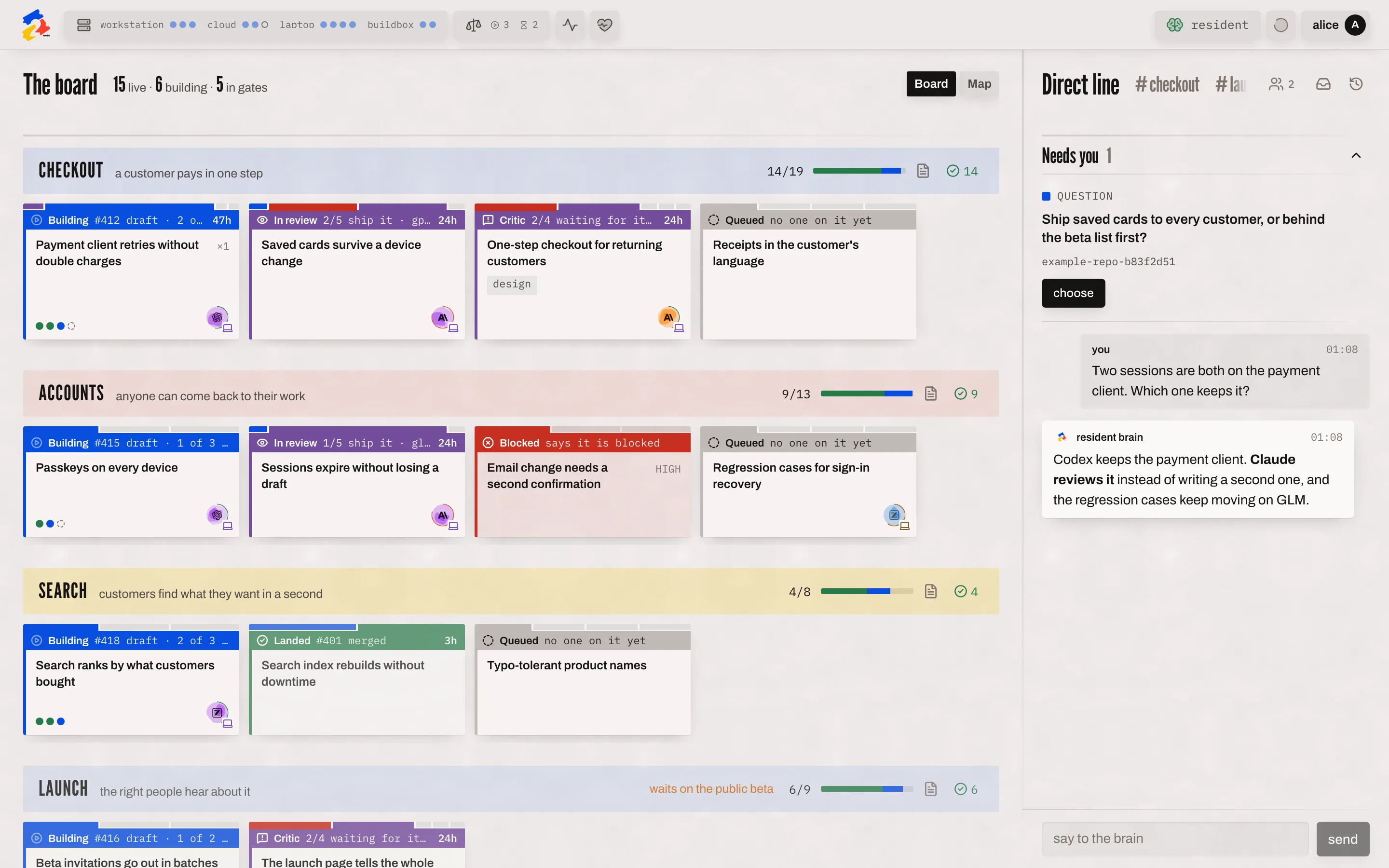
The desk. The board groups cards into lanes such as Checkout, Accounts, Search and Launch, each with its goal and progress, and its cards show work building, in review, under critique, queued and blocked across many sessions. On the right, Needs you holds one question, and below it the brain answers the owner about which session keeps the payment client.
Tap to open at full size.
  1. Lanes are goals

    Each lane says what it is for and how far it has come. It is not a queue of tickets.

  2. Cards carry their work

    A card shows where the unit stands, its pull request, the session holding it and how far through the gates it is.

  3. The column is yours

    Needs you holds only the decisions that belong to you. The brain is a message away.

The brain steers. You decide.

The brain reads the whole board, hands each piece of work to the right session and starts a new one wherever there is room. It challenges a plan before it is built, wakes itself the moment something breaks, and follows every change past the merge to see whether it did what it was for. Your rulings travel with it into every decision, and your judgment stays final.
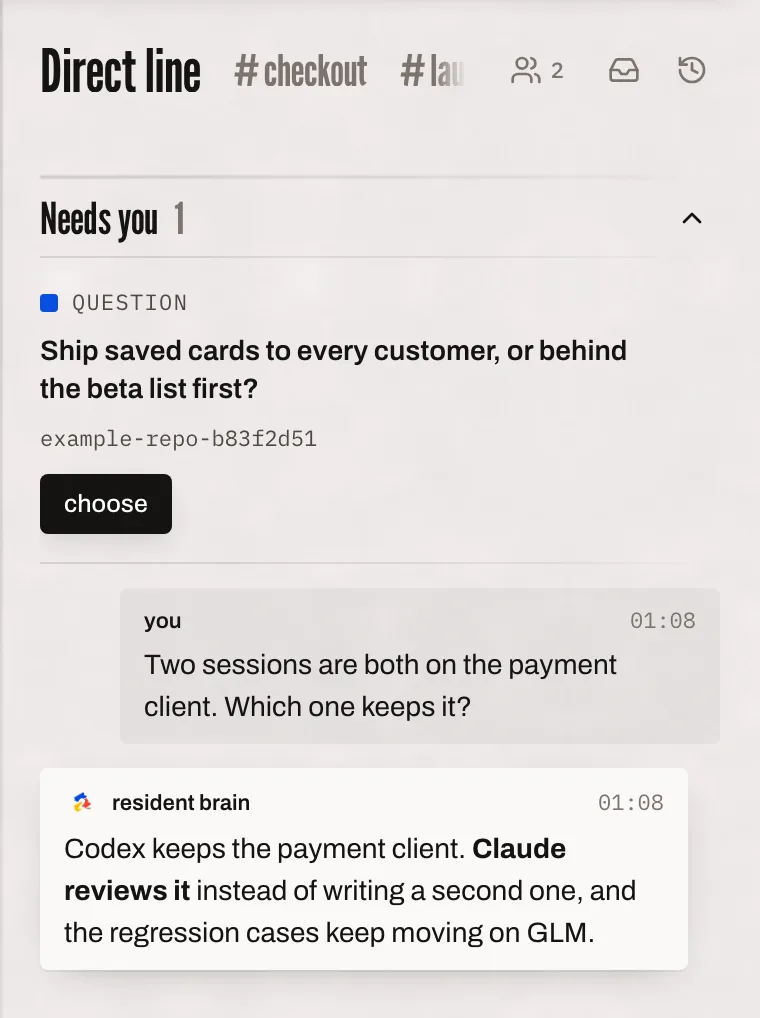
The owner asks the brain which of two sessions keeps the payment client. The brain answers: Codex keeps it, Claude reviews it instead of writing a second one, and the regression cases keep moving on GLM.
Two sessions on one client. Each now has its own job.
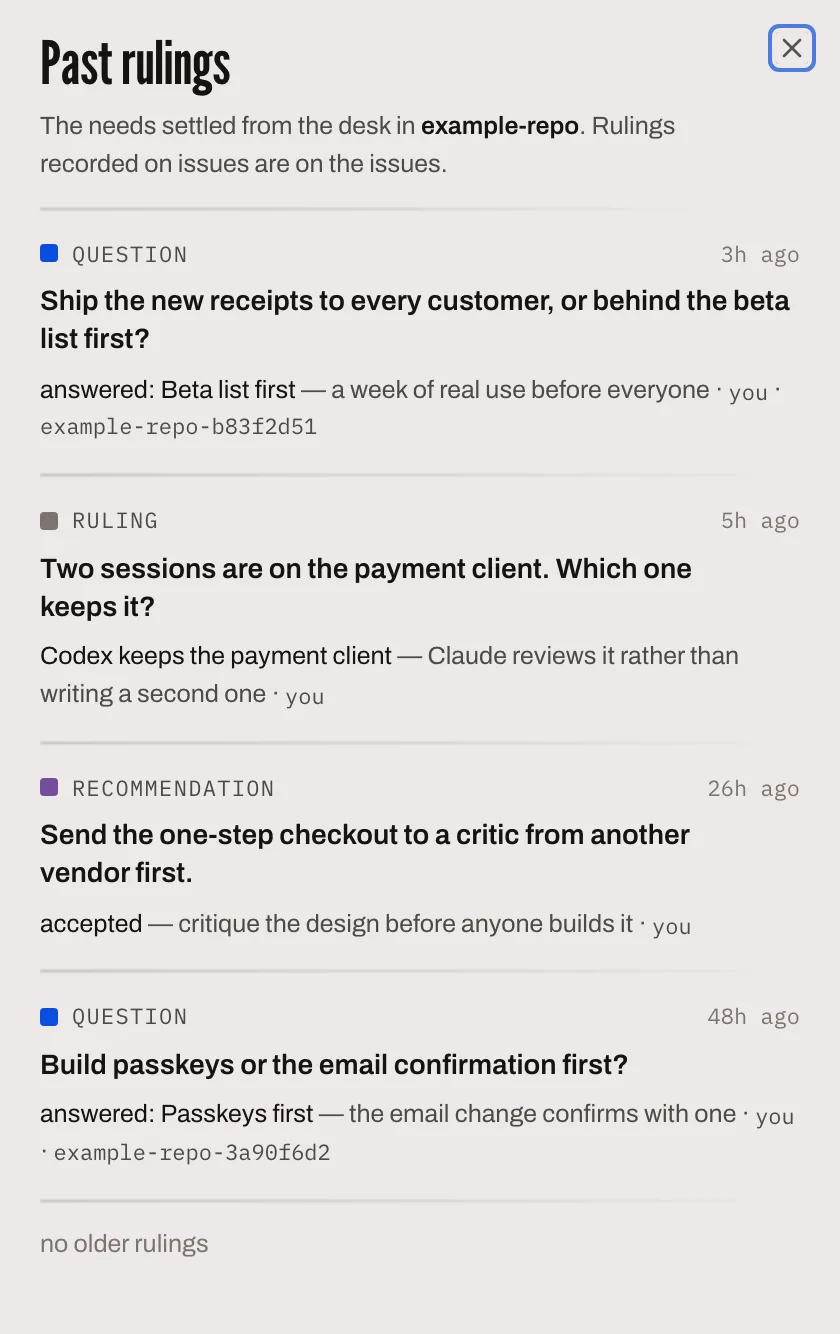
Past rulings: questions the owner answered, a ruling on which session keeps the payment client, and an accepted recommendation to send the checkout design to a critic from another vendor first.
Your rulings, kept. Each one binds the next move.

Any tool. Any machine. Any scale.

Claude Code, Codex, OpenCode and the rest join with one command and stay reachable, on your laptop, your workstation or the cloud. Allowance you would have left idle goes to work overnight, checked before it counts. When the work outgrows your machines, the same brief reaches a swarm beyond them, held to the same standards and the same review.
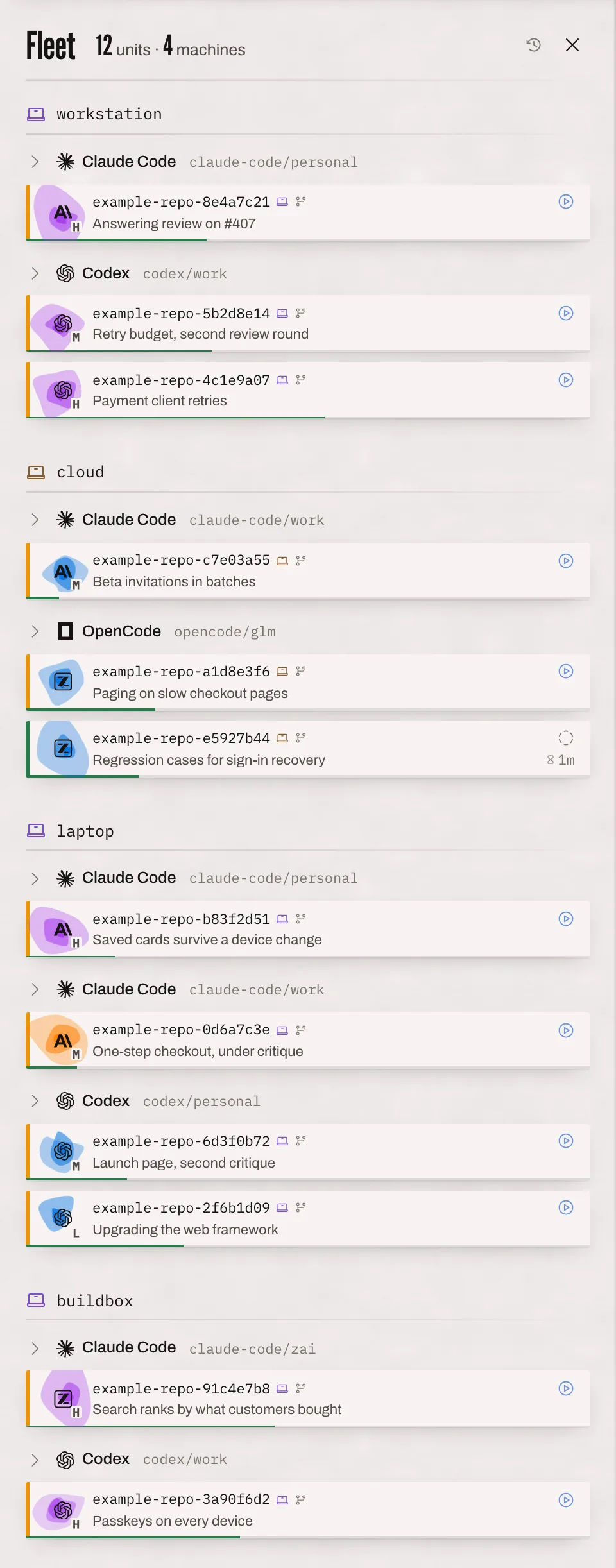
Fleet: twelve sessions on four machines, a workstation, a laptop, the cloud and a build box, grouped by account across Claude Code, Codex, OpenCode and GLM, each with the work it holds.
Fleet: every session, on every machine, by account.
Beyond your own machines
  • Explore
  • Reconcile
  • Review

One brief. A swarm behind it.

Explorers try the alternatives, a second group reconciles what they find, and a model that wrote none of it reviews the result.

Drawn: the same brief, carried past your own machines.

Judged by a model that wrote none of it.

Critique before the build, review before the merge. Steering commissions each from another vendor’s model, which reads a sandboxed clone against your project’s own reviewer brief. Every review stands under the machine that runs it, and the judge is itself tested with deliberately broken fixes, so a pass means something.

2mw2lt review, round 1/5: do not ship

blocking src/cards/restore.ts:41: A saved card is restored on a new device before the session is verified again.

2mw2lt review, round 2/5: ship it

Ran the card restore tests and read the restore path against the session check. The fix holds on a fresh device and on a returning one.

minor src/cards/restore.ts:58: The retry limit is a bare number. Name it beside the timeout so the two change together.
Provider
deepseek
Thinking
high
Persona
.claude/agents/code-reviewer.md
Duration
3m 12s
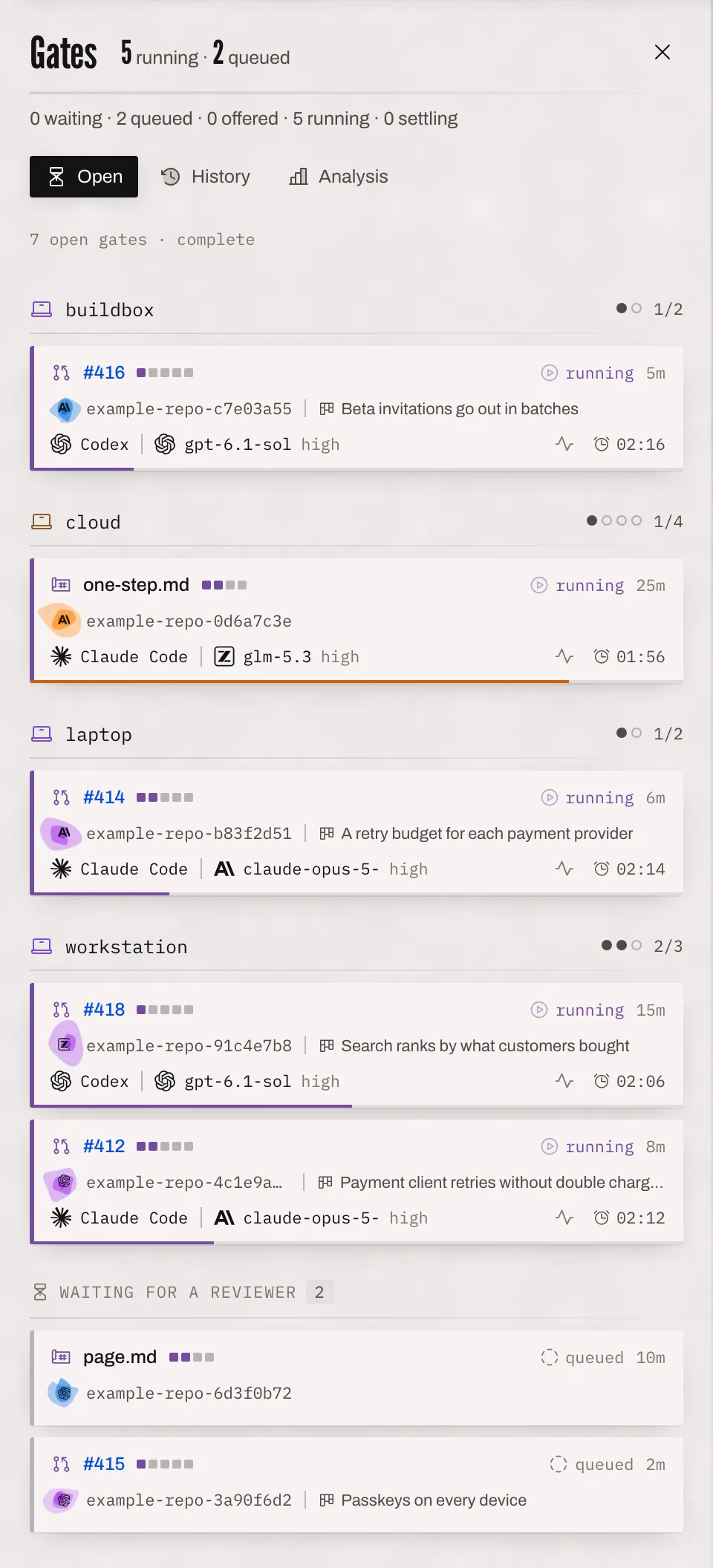
Gates, open now: five gates running under the machines that hold them, each machine against the limit it declares, with the pull request or spec, the session that asked for it, the card it serves, and the reviewer’s tool and model; two more wait for a reviewer.
Every review, standing under the machine that runs it.

An example in the format the gate posts. The pull request it judged is the saved-cards card on the board above.

Work outlives its workers.

Sessions, accounts and machines are where work runs, not what it is. Before a session compacts, hands over or leaves, it writes a checkpoint. The map keeps what waits on what, and the work is followed past the merge to the outcome it was for, until the brain says keep, change or retire.
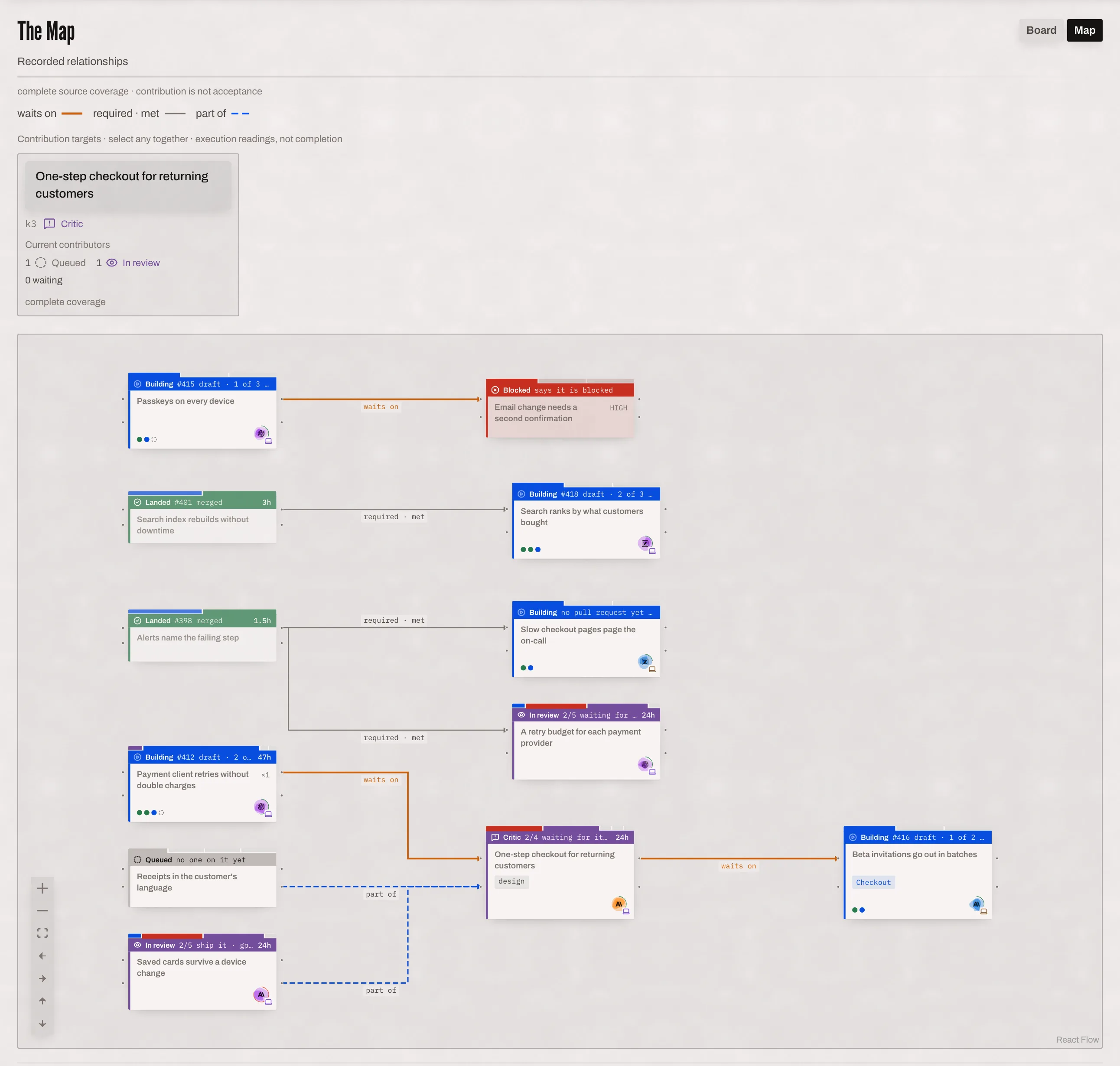
The map: cards joined by what they wait on, what they required and what they are part of. The one-step checkout waits on payment retries, and saved cards and receipts are part of it.
The map: what each piece of work waits on.
example-repo-b83f2d51 · pull request #409

Checkpoint

State
Review passed on round 2. Waiting on the owner: every customer, or the beta list first.
Next
On the answer, set the flag and merge. Name the retry limit as the review asked.
Agreed
Restoring a card always waits for the session check, on every device.

Only the calls that are yours. And the people you trust.

A session does not interrupt you with what it can settle. A decision that is yours arrives with its context, the options and a recommendation, and one press answers it, even from your phone. Bring a trusted person or another assistant into a room beside the brain: they share the conversation, never your controls.
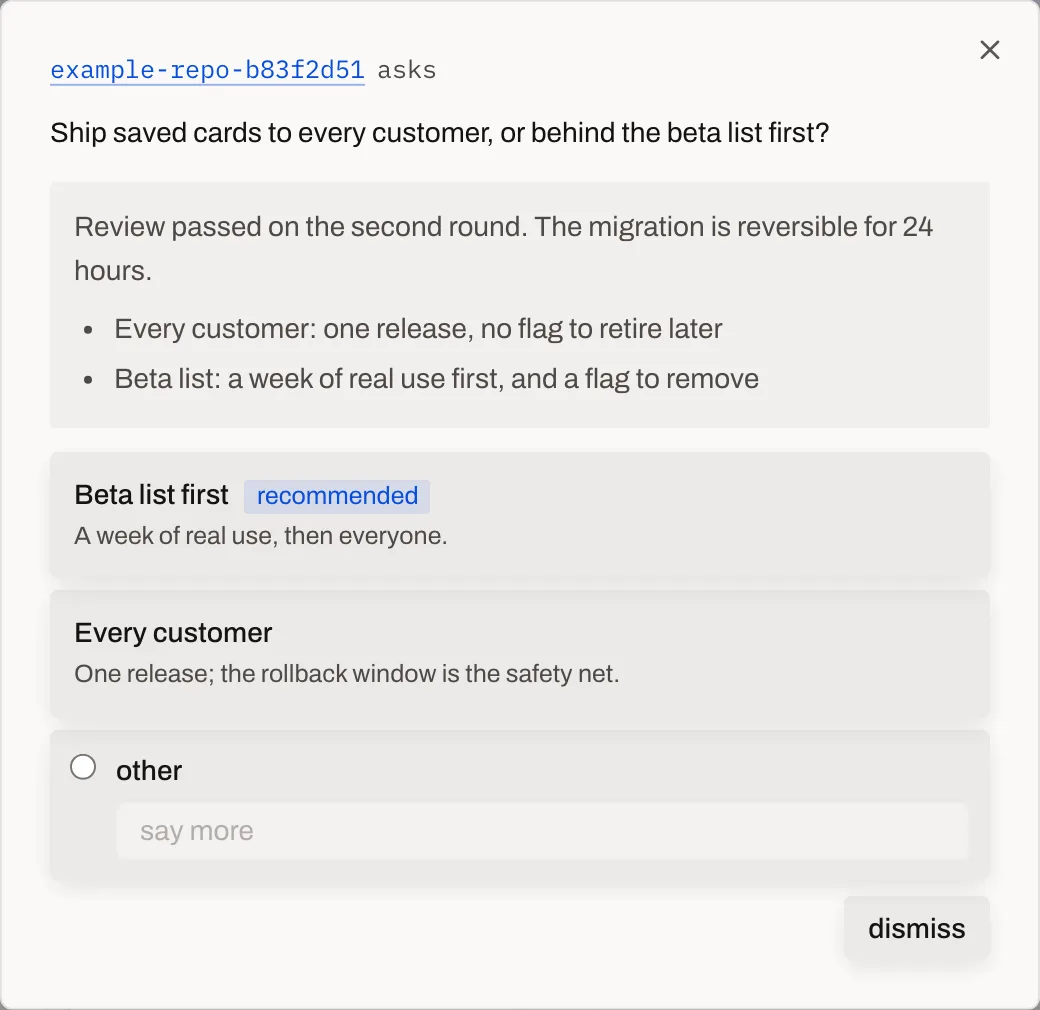
A session asks: ship saved cards to every customer, or behind the beta list first? The context notes that review passed on the second round. Two options follow, Beta list first marked recommended, with a field for another answer.
A question, with the options and what each one costs.
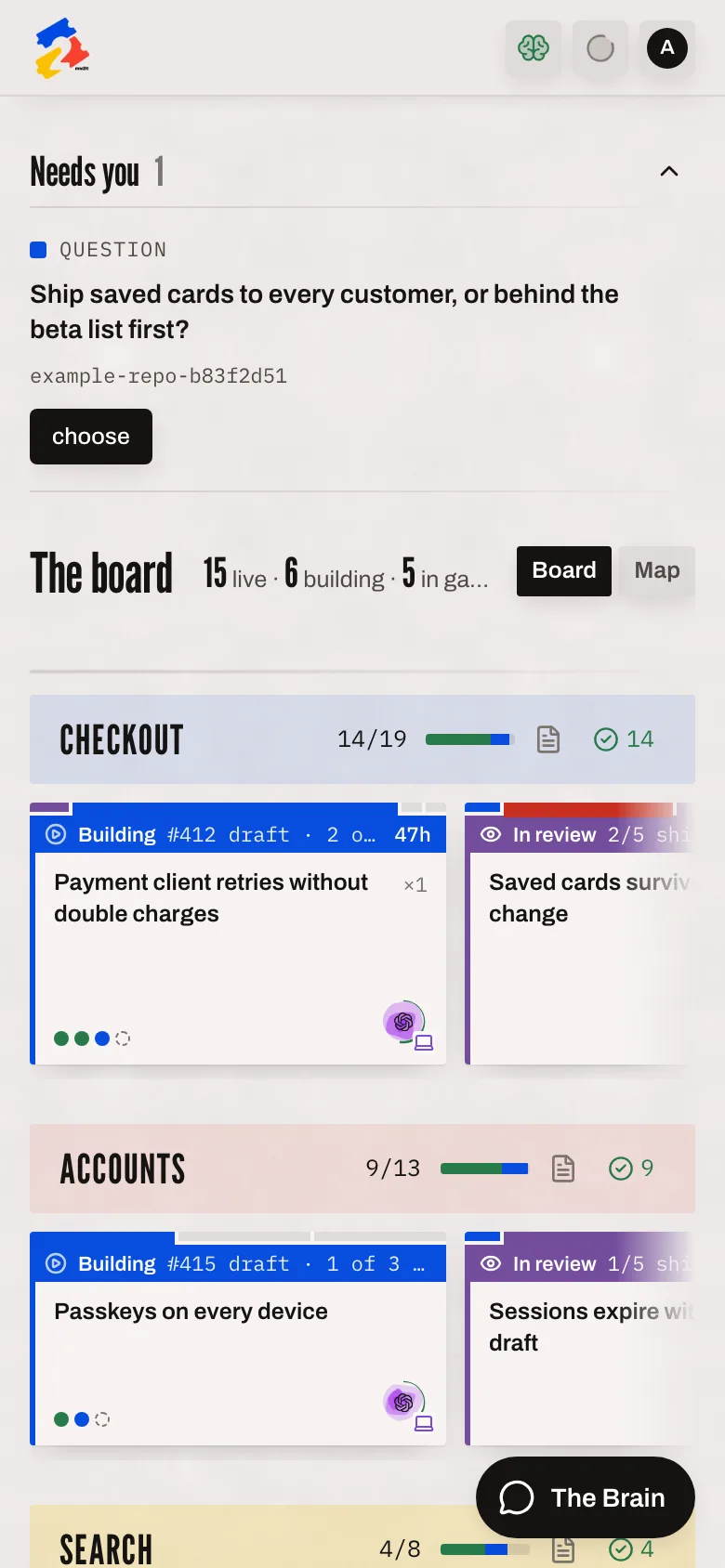
The desk on a phone: Needs you with the waiting question at the top, the board below it, and a button that opens the brain.
The same desk, at phone width.
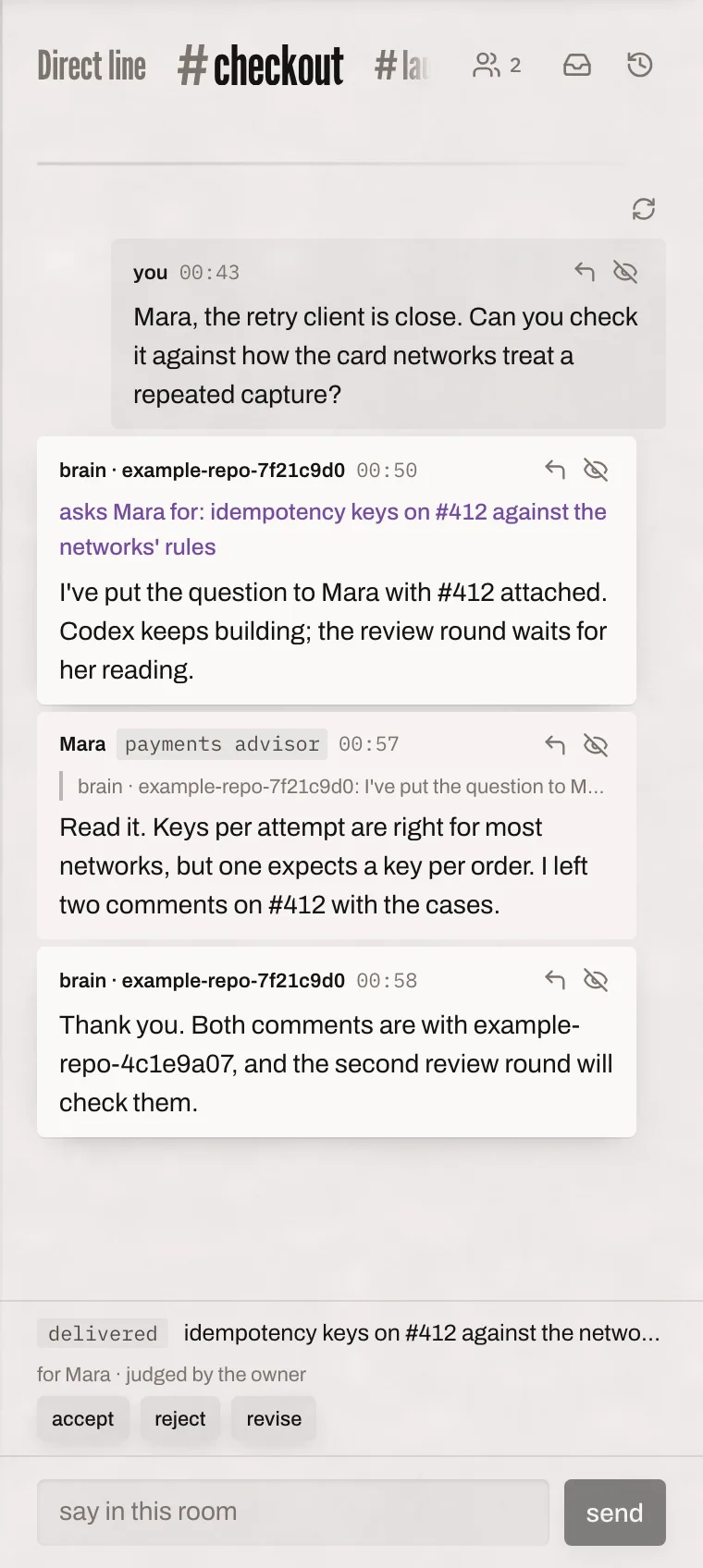
A room named checkout: the owner asks Mara, a payments advisor, to check the retry client. The brain puts the question to her with the pull request attached, and she answers with two comments.
A room: a trusted guest and the brain, on the same work.
The people you trust
  • Bring the craft
  • Review

Your circle. Your standards.

A specialist you trust takes the part that needs a human hand, working from the same brief, and the review that judges the agents judges their work too.

Drawn: trusted people, held to the same review.

Start with one repository. Keep the sessions you run.